The best compact mini PCs save desk space without forcing you to sacrifice everyday speed, connectivity, or upgrade potential. This roundup compares ten models spanning office work, home computing, media playback, and light gaming.
Use the buying guide below to match processor performance, memory, storage, graphics capability, and expansion options with the way you plan to use your next small desktop.
Best 10 Compact Mini PCs Picks for 2026
Performance Creator Pick
ACEMAGICIAN S3A Ryzen 7 Mini PC

- Ryzen 7 H 255 with Radeon 780M graphics
- Triple 4K display support
- Storage expandable up to 4TB
Best For: Creators, developers, and demanding multitaskers
Long-Term Flexibility Pick

- Upgradeable to 96GB RAM and 6TB storage
- Supports up to four displays
- 3-year limited warranty
Best For: Expandable office setups and home servers
Networking Value Pick

- Dual 2.5GbE networking ports
- RAM expandable to 64GB
- Triple 4K display support
Best For: Office users, routers, NAS builds, and homelabs
Refurbished Budget Pick
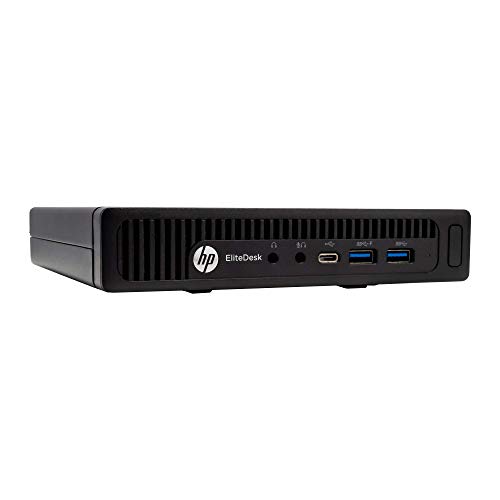
- 16GB RAM and 240GB SSD included
- Compact business-class refurbished design
- Keyboard and mouse included
Best For: Basic office, education, and low-cost desktop use
Performance Pick
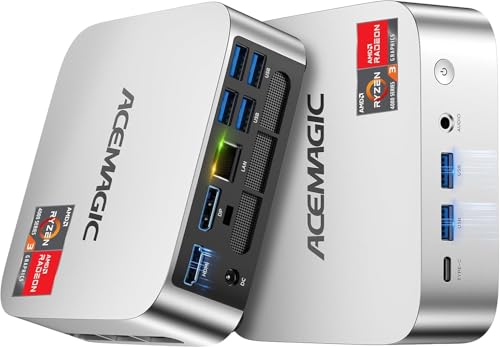
- Ryzen Pro 7330U with 4 cores and 8 threads
- Triple 4K display support and extensive connectivity
- Built-in power supply with VESA mounting
Best For: Office multitasking, study, and multi-monitor workspaces
Quiet Office Value

- Core i3 processor for everyday office work
- Dual 4K display output at 60Hz
- Dual M.2 slots and quiet 35dB cooling
Best For: Home office, study, browsing, and dual-monitor productivity
Best Budget Performance

- 16GB RAM and 512GB NVMe SSD
- Dual 4K HDMI display support
- WiFi 6 and Bluetooth 5.3
Best For: Home offices, multitasking, and dual-monitor setups
Best Expandable Storage

- 16GB RAM for everyday multitasking
- Supports M.2 and 2.5-inch drive expansion
- Dual 4K HDMI outputs at 60Hz
Best For: Home offices, classrooms, and expandable media storage
Best Modern CPU
KAMRUI Pinova P1 Ryzen 3 Pro Mini PC

- Ryzen 3 Pro 7330U up to 4.3GHz
- Windows 11 Pro and business features
- HDMI, DisplayPort, and Type-C outputs
Best For: Business workstations and VESA-mounted multi-display setups
Performance Creator Pick – ACEMAGICIAN S3A Ryzen 7 Mini PC
For shoppers comparing compact mini pcs, the ACEMAGICIAN S3A stands out when desktop-class multitasking and integrated graphics performance matter more than entry-level pricing. Its Ryzen 7 H 255 processor, Radeon 780M graphics, 16GB LPDDR5 memory, and 512GB PCIe 4.0 SSD are suited to demanding everyday work, programming, content creation, and casual gaming.
Best For: Creators, developers, and power users who need three-display productivity in a small desktop.
Pros:
- Ryzen 7 8-core/16-thread processing and Radeon 780M graphics support demanding multitasking and creative workloads.
- Supports up to three 4K displays through HDMI, DisplayPort, and USB4 Type-C.
- Three power modes, dual-fan cooling, expandable storage up to 4TB, and a 2-year warranty.
Cons:
- LPDDR5 memory is not described as user-upgradeable.
- The compact system’s strongest performance mode can use more power and may produce more fan noise than silent mode.
The S3A is a strong fit for buyers who want a small workstation-style computer rather than a basic office box. Its display support and performance modes add flexibility, while the upgradeable storage helps extend its usefulness.
Long-Term Flexibility Pick – GEEKOM A5 Pro Ryzen 5 Mini PC
The GEEKOM A5 Pro is one of the more upgrade-friendly compact mini pcs in this roundup. It combines a Ryzen 5 7530U, 16GB of DDR4 RAM, and a 1TB SSD with support for substantially more memory and storage, making it practical for office work, home-server projects, and long-term use.
Best For: Home offices, multi-monitor workspaces, and users planning future RAM or storage upgrades.
Pros:
- Upgradeable RAM supports up to 96GB, while storage can expand up to 6TB.
- Supports up to four simultaneous displays and up to 8K output.
- Metal chassis, Wi-Fi 6, Bluetooth 5.4, SD card slot, and a 3-year limited warranty.
Cons:
- Ryzen 5 integrated graphics are positioned for productivity and casual gaming rather than demanding gaming.
- The supplied configuration uses DDR4 memory instead of newer DDR5 or LPDDR5 memory.
Choose the A5 Pro if expandability and a longer warranty are priorities. Its 1TB starting drive is convenient, and the compact chassis can mount behind a monitor without giving up multi-display capability.
Networking Value Pick – BOSGAME E5 Ryzen 3 Mini PC
Among these compact mini pcs, the BOSGAME E5 is especially interesting for practical office use and networking projects. Its Ryzen 3 5300U, upgradeable memory, dual M.2 storage design, and two 2.5GbE ports give it useful flexibility beyond a typical basic desktop.
Best For: Business users, home labs, software routers, NAS projects, and triple-monitor office setups.
Pros:
- Dual 2.5GbE ports suit pfSense, OpnSense, NAS, and homelab configurations.
- Dual SODIMM slots support up to 64GB RAM, with a second M.2 slot for additional storage.
- Triple 4K display output, Windows 11 Pro, VESA mounting, and reported sub-25dB operation.
Cons:
- The included 8GB RAM and 256GB SSD are modest for heavier multitasking.
- Additional RAM or storage upgrades are not included.
The E5 offers unusually strong connectivity for its class. It is a sensible choice when networking features and upgrade paths matter more than high-end creative or gaming performance, though many buyers may want to budget for upgrades.
Refurbished Budget Pick – HP EliteDesk 800 G2 Mini PC
The renewed HP EliteDesk 800 G2 is a budget-oriented option for shoppers seeking compact mini pcs for basic education, office, or everyday desktop tasks. Its 16GB DDR4 RAM, 240GB SSD, included keyboard and mouse, and small business-oriented chassis make it a straightforward ready-to-use package.
Best For: Basic office work, education, web use, and buyers prioritizing a low-cost refurbished business computer.
Pros:
- Includes 16GB DDR4 memory and a 240GB SSD.
- Compact 7.2-by-7.2-by-1.9-inch design with six USB ports, DisplayPort, VGA, and wired LAN.
- Certified refurbished testing and included keyboard and mouse add convenience.
Cons:
- The older quad-core i5-6500T platform is less modern than the newer AMD systems in this roundup.
- Storage is limited to 240GB, and the renewed unit carries a minimum 90-day warranty.
- Wireless specifications and the operating-system details vary across the supplied listing information.
This HP makes the most sense when price and basic functionality are the main concerns. It can handle routine workloads, but buyers seeking newer connectivity, stronger integrated graphics, or longer warranty coverage should consider the newer mini PCs above.
Performance Pick – ACEMAGIC K1 Ryzen Pro Mini PC
The ACEMAGIC K1 is one of the more capable compact mini PCs for buyers who want responsive everyday performance in a very small desktop. Its Ryzen Pro 7330U, 16GB of memory, Windows 11 Pro, and support for up to three 4K displays make it suitable for office work, study, streaming, and multitasking.
Best For: Home offices, business users, students, and buyers who want a compact PC with strong connectivity and triple-display support.
Pros:
- Ryzen Pro 7330U offers 4 cores, 8 threads, and boost speeds up to 4.3GHz.
- Includes Windows 11 Pro, 16GB LPDDR4 memory, and a 256GB M.2 SSD.
- Supports 4K triple-display output and provides six USB Type-A ports plus USB-C.
- Built-in power supply reduces desktop cable clutter, while VESA mounting saves space.
Cons:
- The 16GB memory is non-expandable.
- The included 256GB SSD may be limited for large media libraries.
- Wireless connectivity is Wi-Fi 5 and Bluetooth 4.2 rather than newer standards.
Choose the K1 when processor performance, built-in power delivery, and broad port selection matter more than upgradeable memory. Its compact chassis and quiet cooling also make it easy to place in a workspace or mount behind a monitor.
Quiet Office Value – BMAX B6 Core i3 Mini PC
The BMAX B6 is a practical option among compact mini PCs for everyday office and study tasks. Its Intel Core i3-8109U, 12GB of onboard memory, dual 4K display support, and small VESA-mountable chassis fit neatly into home offices and other space-conscious setups.
Best For: Web browsing, documents, spreadsheets, streaming, education, and quiet home-office setups.
Pros:
- Core i3-8109U and Intel Iris Plus Graphics 655 are suited to everyday computing.
- Dual M.2 slots allow storage expansion up to 4TB.
- HDMI and DisplayPort support two 4K displays at 60Hz.
- Smart cooling is rated as low as 35dB, and the compact system supports VESA mounting.
Cons:
- The processor has 2 cores and 4 threads, making it less suited to demanding workloads.
- The 12GB memory is onboard rather than presented as user-upgradeable.
- The included 256GB M.2 SATA SSD may require expansion for extensive storage needs.
The B6 makes sense for buyers who prioritize a quiet, tidy workstation and flexible storage over high-end performance. It is particularly well matched to dual-screen productivity and routine home computing.
Connectivity Champion – KAMRUI Pinova P2 Ryzen Mini PC
The KAMRUI Pinova P2 combines a 4-core, 8-thread Ryzen processor with 16GB of memory and unusually broad display and port options. For shoppers comparing compact mini PCs, it stands out as a flexible choice for multitasking, home entertainment, conference rooms, and multi-monitor work.
Best For: Buyers who need triple 4K displays, fast USB connectivity, expandable storage, and a versatile home or business mini desktop.
Pros:
- Ryzen 5 5425U reaches up to 4.1GHz and includes 4 cores, 8 threads, and 8MB of L3 cache.
- Supports triple 4K displays through HDMI 2.0, DisplayPort 1.4, and USB-C.
- Two M.2 storage slots support SATA/NVMe expansion up to 4TB.
- Offers multiple 10Gbps USB ports, Gigabit Ethernet, VESA mounting, and quiet cooling.
Cons:
- The 256GB included SSD may be modest for extensive files or media.
- Integrated Radeon graphics are intended for 4K playback and light casual gaming rather than demanding gaming.
- The 5.05-inch square chassis is compact but slightly larger than some ultra-small alternatives.
The Pinova P2 is a strong fit when expandability and connectivity are priorities. Its triple-display capability and two storage slots give it more flexibility than a basic compact desktop, while the small chassis remains easy to mount or carry.
Best Budget Performance – Getorli Ryzen 5 3500U Mini PC
For shoppers comparing compact mini pcs, the Getorli GT101 offers a practical balance of everyday speed, memory, and storage in a small desktop. Its Ryzen 5 3500U processor, 16GB of RAM, and 512GB NVMe SSD are well suited to home-office work, browsing, streaming, and multitasking.
Best For: Home offices, business tasks, web browsing, media streaming, and users who want dual-monitor support.
Pros:
- 16GB DDR4 RAM supports multitasking and can be expanded to 32GB.
- 512GB NVMe SSD provides quick boot-ups and ample everyday storage.
- Dual HDMI outputs support two 4K displays.
- WiFi 6, Bluetooth 5.3, multiple USB ports, and a VESA bracket add flexibility.
Cons:
- The Ryzen 5 3500U is an older processor generation.
- It uses active fan cooling rather than a fanless design.
The Getorli is a strong value-oriented choice when you need more memory and storage than entry-level mini PCs typically provide. Its dual-display support and modern wireless connectivity make it especially practical for a compact workstation.
Best Expandable Storage – KAMRUI AK1PLUS N5095 Mini PC
The KAMRUI AK1PLUS is one of the more storage-flexible compact mini pcs for everyday computing. With 16GB of LPDDR4X memory, a 256GB SSD, and support for additional M.2 and 2.5-inch drives, it fits home-office, school, and media-center setups where future expansion matters.
Best For: Office work, online classes, video calls, digital signage, and users who need expandable local storage.
Pros:
- 16GB RAM supports responsive browsing and multitasking.
- Storage can expand through M.2 and 2.5-inch SATA drives, up to 4TB total as described.
- Dual HDMI 2.0 outputs support two 4K displays at 60Hz.
- Compact 5.04-inch square design includes four USB 3.2 ports and Gigabit Ethernet.
Cons:
- The Intel Celeron N5095 is aimed at everyday tasks rather than demanding workloads.
- The included 256GB SSD offers less starting capacity than the Getorli’s 512GB drive.
This AK1PLUS makes the most sense for buyers who value quiet, low-power daily operation and a clear storage-upgrade path. Its dual-display support and business-oriented wake features also suit practical workstation or kiosk deployments.
Best Modern CPU – KAMRUI Pinova P1 Ryzen 3 Pro Mini PC
The KAMRUI Pinova P1 is a compact mini pcs option for buyers prioritizing a newer Ryzen Pro platform and Windows 11 Pro. Its Ryzen 3 Pro 7330U processor delivers four cores and eight threads up to 4.3GHz, while HDMI, DisplayPort, and Type-C connectivity support flexible desk setups.
Best For: Business users, compact workstations, multiple displays, light editing, web work, and portable office setups.
Pros:
- Ryzen 3 Pro 7330U provides four cores, eight threads, and boost speeds up to 4.3GHz.
- Windows 11 Pro is preinstalled, with Linux, PXE, Wake-on-LAN, and related business features supported.
- HDMI, DisplayPort, and Type-C enable flexible display connectivity, including 4K at 60Hz.
- Small 5.06-inch design includes a VESA bracket for mounting behind a monitor.
Cons:
- 8GB of RAM is less than the 16GB included with the other listed models.
- The 256GB SSD provides limited starting storage for large media libraries.
- Wireless connectivity is listed as WiFi 5 and Bluetooth 4.2 rather than newer standards.
The Pinova P1 is the strongest fit when processor generation, Windows 11 Pro, and mounting flexibility matter more than maximum memory or storage. It is a capable compact workstation foundation, though heavier multitaskers may prefer a 16GB model.
How We Picked These Compact Mini PCs
We selected these systems to represent the main reasons shoppers choose a mini PC: smaller workspaces, lower power use, affordable home computing, quiet media setups, and capable performance in a compact enclosure. The lineup includes newer AMD Ryzen systems, Intel-based budget options, refurbished business hardware, and models with different memory and storage configurations.
Our comparison focuses on processor class, integrated graphics, installed RAM, SSD capacity, display support, upgradeability, operating system, and overall suitability for common workloads. Specifications can vary by seller or configuration, so verify the exact listing before purchasing.
Quick Comparison
| Best For | Look For | Models in This Roundup |
|---|---|---|
| Light gaming and graphics | Ryzen 7 or newer Ryzen 5, Radeon 780M-class graphics | ACEMAGICIAN S3A |
| Office and multitasking | 16GB RAM, modern Ryzen processor, 512GB or larger SSD | GEEKOM A5Pro, ACEMAGIC K1, KAMRUI Pinova P2 |
| Business use on a budget | Windows Pro, adequate RAM, established business hardware | HP EliteDesk 800 G2, BOSGAME E5 11 Pro |
| Basic home computing | Low cost, SSD storage, dual-display support | BMAX, KAMRUI AK1PLUS, KAMRUI Pinova P1 |
| Affordable general use | Four-core Ryzen processor and 16GB memory | Getorli Ryzen 5 3500U |
Key Buying Factors for Compact Mini PCs
Processor and Graphics
Choose the CPU according to your workload. Ryzen 7 and newer Ryzen 5 chips are better suited to heavy multitasking, photo work, coding, and light gaming. Older Ryzen 3, Ryzen 5, and Intel Core or Celeron systems can handle browsing, documents, streaming, and point-of-sale tasks, but they offer less headroom. Integrated graphics are fine for everyday video and casual games; they are not a substitute for a dedicated gaming GPU.
Memory and Storage
For a comfortable Windows experience, 16GB of RAM is the safest target, especially if you keep many browser tabs or applications open. An 8GB model can work for basic tasks but may age faster. A 512GB or 1TB NVMe SSD provides more room for applications and files than a 240GB or 256GB drive. Check whether RAM and storage are replaceable before assuming an advertised maximum capacity applies to every configuration.
Ports, Displays, and Expansion
Review the port selection carefully. HDMI, DisplayPort, or USB-C video output can make a mini PC useful for a dual-monitor workstation, while USB-A ports remain important for peripherals. If you need local media storage, look for a 2.5-inch drive bay, an extra M.2 slot, or a card reader. Also confirm Wi-Fi, Ethernet speed, and Bluetooth requirements.
Thermals, Support, and Condition
A compact chassis has less room for cooling, so sustained workloads may produce fan noise or reduced performance. Check independent reviews when possible. Refurbished business PCs can offer excellent value, but inspect warranty coverage, included accessories, cosmetic condition, and the age of the platform.
Who Should Buy Which Compact Mini PCs?
Choose the ACEMAGICIAN S3A if integrated graphics performance and light gaming matter most. The GEEKOM A5Pro and ACEMAGIC K1 are stronger all-purpose choices for multitasking and productivity. The HP EliteDesk is worth considering for buyers who prioritize business-oriented Windows features and refurbished value. The BOSGAME, KAMRUI Pinova P2, and Getorli models suit everyday work with more performance than entry-level Celeron systems. For simple browsing, streaming, documents, or a low-cost secondary computer, the BMAX, KAMRUI AK1PLUS, or Pinova P1 may be sufficient.