The right sleeping bag can make the difference between a restorative night on the trail and a cold, uncomfortable morning. The best sleeping bags for backpacking balance warmth, packed size, weight, durability, and price for the conditions you expect to encounter.
This roundup compares 10 options ranging from compact down bags to versatile synthetic designs and roomy budget-friendly models, helping you narrow your choice by season, insulation, and sleeping style.
Best 10 Sleeping Bags for Backpacking Picks for 2026
Best Sustainable Down Pick

- 550-fill-power, RDS-certified down
- Recycled fabrics with PFAS-free DWR
- 20-degree, three-season mummy design
Best For: Lightweight-minded backpackers seeking a compressible down bag
Best Big-and-Tall Synthetic Pick

- Extra-large 90 x 39-inch dimensions
- Synthetic insulation for 30-70°F conditions
- Lifetime replacement guarantee included
Best For: Tall or broad campers needing a roomy mild-weather bag
Best Cold-Weather Mummy

- Cold-weather rating down to 0°F
- Thermolock draft tube and adjustable hood
- Machine washable with five-year warranty
Best For: Cold-weather campers wanting synthetic mummy-bag warmth
Warmth-Focused Value
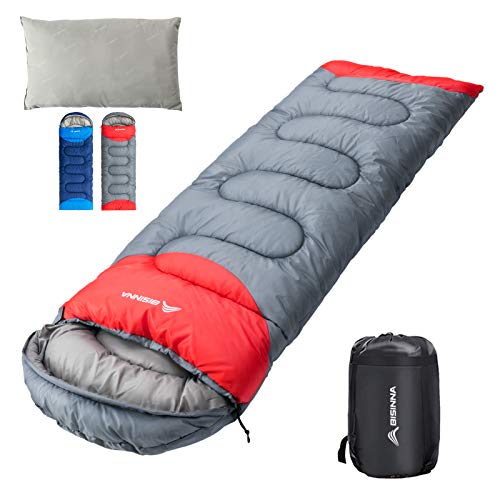
- 32°F rating with 400GSM hollow-cotton fill
- Hood, foot vent, and waterproof polyester shell
- Washable and includes a compression sack
Best For: Budget-conscious campers and heavier-duty backpacking trips
Ultralight Hybrid Versatility
ATEPA 3-Season Down Sleeping Bag

- 2.65-pound hybrid down and synthetic insulation
- 45°F comfort and 35°F limit ratings
- Converts to a blanket or poncho and attaches to a pad
Best For: Three-season backpackers wanting adaptable, moisture-conscious performance
Reliable Mummy Comfort
TETON Sports 20°F Sleeping Bag

- 20°F-rated synthetic microfiber mummy bag
- Roomy footbox, soft liner, and draft tube
- 2.9 pounds with included stuff sack
Best For: Cool-weather backpacking and camping with comfort-focused features
Ultralight Pick
Naturehike Compact Envelope Sleeping Bag

- Weighs about 1.68 pounds
- Compresses to roughly 5 by 12 inches
- Roomy envelope shape for easy movement
Best For: Warm-weather backpacking and lightweight travel
Versatile 3-Season Choice
MalloMe Lightweight Sleeping Bag
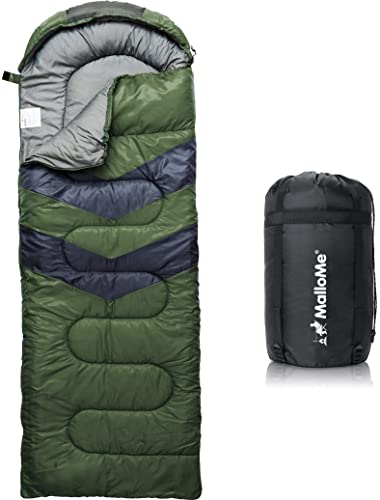
- Rated for 50°F to 77°F
- Waterproof outer shell
- Includes compression sack with straps
Best For: Casual three-season camping and family trips
Best Sustainable Down Pick – Kelty Cosmic 20
The Kelty Cosmic 20 is a strong choice among sleeping bags for backpacking when you want a compressible down mummy bag with sustainability-focused materials. Its 550-fill-power down, recycled shell and liner fabrics, and 20-degree temperature rating make it suited to three-season trips.
Best For: Backpackers who want a relatively light, compressible mummy bag for cool three-season conditions.
Pros:
- 550-fill-power, RDS-certified down provides a compressible insulation package.
- Recycled nylon and polyester fabrics use PFAS-free DWR.
- Dual-direction zippers and a mummy shape support campsite comfort and ventilation.
- Regular size weighs about 2 pounds 6 ounces and packs to approximately 13 x 7 inches.
Cons:
- The ISO limit rating is 21 degrees, so the 20-degree designation is not a guarantee of comfort at that temperature.
- The mummy shape offers less room to move than a rectangular sleeping bag.
- Down insulation generally requires more care around moisture than synthetic fill.
With traceable down, recycled fabrics, and a useful balance of warmth and packability, the Cosmic 20 is the most backpacking-focused option in this group. Check the size chart carefully, since the regular version is intended for sleepers up to 6 feet.
Best Roomy Budget Option – SOULOUT 3-4 Season Sleeping Bag
The SOULOUT 3-4 Season sleeping bag favors space and convenience over ultralight backpacking performance. Its rectangular envelope design, synthetic insulation, water-resistant polyester shell, and machine-washable construction make it a practical choice for casual camping and travel.
Best For: Adults and teens who prioritize room to move, easy cleaning, and broad recreational use.
Pros:
- Spacious 86.6 x 32.7-inch design fits users up to 7.1 feet.
- High-loft polyester insulation is intended for spring, fall, and cooler summer nights.
- Water-resistant outer shell helps repel light rain, moisture, and dew.
- Included stuff sack and machine-washable construction simplify storage and maintenance.
Cons:
- At about 4.5 pounds, it is considerably heavier than a typical backpacking-focused down bag.
- The listed 32-77°F range is less suitable for genuinely cold conditions.
- The rectangular shape takes up more carrying space than a mummy design.
This SOULOUT model is better suited to car camping, travel, and short hikes than weight-sensitive backpacking. Choose it when comfort, generous dimensions, and washability matter more than minimal pack weight.
Best Big-and-Tall Synthetic Pick – VENTURE 4TH XXL
The VENTURE 4TH XXL is a practical option among sleeping bags for backpacking if fit is your top priority. Measuring 90 x 39 inches, it gives taller or broader campers more room while combining synthetic hollow-fiber insulation, a water-resistant shell, and a compression carry sack.
Best For: Big-and-tall campers who need an extra-large, breathable bag for mild three-season trips.
Pros:
- 90 x 39-inch XXL dimensions allow substantial room to stretch out.
- Two-way zipper helps adjust airflow in temperatures from 30-70°F.
- Water-resistant polyester shell and machine-washable construction support regular outdoor use.
- Includes a compression carry bag and lifetime replacement guarantee.
Cons:
- At about 4.4 pounds, it is heavy for weight-conscious backpacking.
- The 30-70°F range is aimed at mild conditions rather than winter use.
- Its envelope shape is less thermally efficient than a mummy shape.
The VENTURE 4TH stands out for its generous fit and warranty rather than compactness. It can work for car-supported treks or users who cannot comfortably fit in standard bags, but ultralight backpackers may find its weight and packed volume limiting.
Best Cold-Weather Mummy – Coleman North Rim 0°F
The Coleman North Rim 0°F is designed for cold-weather camping, with a mummy shape, Coletherm hollow-polyester insulation, an adjustable hood, and a Thermolock draft tube. For sleeping bags for backpacking, its warmth-focused design is more appropriate when low temperatures matter more than minimal packed size.
Best For: Campers seeking a synthetic mummy bag for very cold conditions and users up to 6 feet 2 inches.
Pros:
- Rated for temperatures as low as 0°F, according to the product listing.
- Thermolock draft tube helps reduce heat loss through the zipper.
- Adjustable hood allows users to balance warmth and ventilation.
- No-snag zipper, machine-washable construction, and a five-year limited warranty add convenience.
Cons:
- The supplied notes do not provide a packed weight or compressed dimensions.
- Its cold-weather insulation may be more than needed for mild three-season trips.
- The 82 x 32-inch mummy design offers less freedom of movement than a rectangular bag.
The North Rim is the clear warmth specialist in this selection. Its synthetic insulation and draft-control features suit cold-weather campers, while the missing packed-size information means backpackers should verify carrying dimensions before committing to longer trips.
Warmth-Focused Value – BISINNA 4-Season Sleeping Bag
For shoppers comparing sleeping bags for backpacking, the BISINNA emphasizes warmth, weather resistance, and versatility at a practical weight. Its 400GSM hollow-cotton fill has a stated 32°F rating, while the hood and waterproof polyester shell add protection for cool, damp trips.
Best For: Budget-conscious backpackers and campers who want a warm, washable bag with flexible indoor and outdoor use.
Pros:
- 32°F rating with 400GSM hollow-cotton insulation.
- Adjustable hood, separated foot zipper, and waterproof polyester shell.
- Compression sack included; machine-washable design.
- Can open as a blanket or zip together with another compatible bag.
Cons:
- At 4.2 pounds, it is heavier than many backpacking-oriented bags.
- Cotton insulation may be less compact than down or lightweight synthetic alternatives.
The BISINNA is a feature-rich choice when warmth and versatility matter more than minimizing pack weight. Its heavier construction makes it especially appealing for shorter backpacking trips, car camping, and general outdoor use.
Ultralight Hybrid Versatility – ATEPA 3-Season Down Sleeping Bag
The ATEPA stands out among sleeping bags for backpacking with a 2.65-pound hybrid fill, pad-attachment straps, and multiple configurations. Its 650FP RDS-certified down and recycled synthetic insulation are rated for 45°F comfort and a 35°F limit, making it suited to spring-through-fall conditions.
Best For: Backpackers who want a lightweight, adaptable sleeping system with better moisture tolerance than a fully down-filled bag.
Pros:
- Light 2.65-pound design with included compression sack.
- Hybrid down-and-recycled-synthetic insulation is designed for humid conditions.
- Can function as a sleeping bag, blanket, or poncho.
- Pad-attachment straps, removable hood, foot ventilation zipper, and inner pocket add versatility.
Cons:
- Its 35°F limit rating is intended for three-season use, not deep winter conditions.
- More adjustable features may appeal less to shoppers seeking a simple traditional bag.
With a useful balance of low weight, adaptable configuration, and moisture-conscious insulation, the ATEPA is a compelling option for changing three-season conditions. The pad-attachment system is particularly useful for restless sleepers or uneven campsites.
Reliable Mummy Comfort – TETON Sports 20°F Sleeping Bag
The TETON Sports 20°F bag is a practical pick among sleeping bags for backpacking when warmth, a comfortable liner, and a roomy footbox are priorities. Its synthetic microfiber insulation is designed to provide loft and compressibility, and it includes a stuff sack for packing.
Best For: Backpackers and campers who prefer a warm synthetic mummy bag with a comfort-oriented shape.
Pros:
- 20°F temperature rating for cooler camping conditions.
- Roomy footbox, soft liner, and zipper draft tube improve comfort.
- 2.9-pound synthetic design balances warmth and portability.
- Includes a stuff sack and hang loops for storage.
Cons:
- Its 72-inch maximum height recommendation may not suit taller sleepers.
- The mummy shape is less spacious than a rectangular sleeping bag.
The TETON is a solid middle-ground option for campers who want a lower temperature rating without moving to a more specialized ultralight bag. Pairing it with an insulated camp pad, as the manufacturer recommends, can help improve warmth.
Ultralight Pick – Naturehike Compact Envelope Sleeping Bag
For backpackers prioritizing a low pack weight, the Naturehike is one of the more compact sleeping bags for backpacking. It weighs 1.68 pounds, compresses to about 5 by 12 inches, and includes a compression sack, while its roomy envelope shape suits average-size adults or children.
Best For: Warm-weather backpacking, hiking, travel, and campers who value minimal packed weight.
Pros:
- Very light at approximately 1.68 pounds.
- Compact compression sack helps save pack space.
- Roomy 80.7-by-33.5-inch envelope design allows easy movement.
- Double-reinforced seams and tested zippers support regular use.
Cons:
- Its 59°F/32°F temperature rating is better suited to warmer conditions than serious cold-weather trips.
- The envelope shape may be less thermally efficient than a mummy-style bag.
This is a practical choice when portability matters most. Pairing it with a sleeping pad can improve warmth, as the manufacturer notes, but backpackers should match its temperature rating to their expected conditions.
Versatile 3-Season Choice – MalloMe Lightweight Sleeping Bag
The MalloMe is a versatile option among sleeping bags for backpacking, with a 50°F to 77°F comfort range and a weight of about 3 pounds. Its waterproof outer shell, synthetic insulation, compression sack, and full-length rectangular design make it suitable for a range of casual outdoor trips.
Best For: Spring, summer, fall, family camping, and backpackers who want easy-care synthetic insulation.
Pros:
- Rated for 50°F to 77°F conditions.
- Waterproof HEX-TECH outer shell helps protect against moisture.
- Compression sack with straps simplifies storage and carrying.
- Machine-washable design and wipe-clean shell are convenient to maintain.
Cons:
- At around 3 pounds, it is substantially heavier than ultralight options.
- The rectangular shape can take up more space than a streamlined mummy bag.
Choose this model when comfort, durability, and straightforward care outweigh the need for the smallest possible pack size. The hood drawstring and securing strap add useful adjustability for cooler nights.
Budget Outdoor Option – 3-Season Waterproof Sleeping Bag
This affordable rectangular bag offers a practical balance for campers comparing sleeping bags for backpacking on a budget. It weighs 3.3 pounds, packs to approximately 7.9 by 14.2 inches, and combines hollow-fiber filling with a weather-resistant polyester shell for three-season use.
Best For: Budget-conscious campers, family outings, summer camps, and general outdoor or emergency use.
Pros:
- Three-season design rated for 50°F to 68°F.
- Waterproof and breathable outer polyester fabric helps resist dampness.
- Hood drawstring and foot zipper allow useful temperature adjustment.
- Wipes clean easily and packs into a relatively compact size.
Cons:
- Its 3.3-pound weight is relatively heavy for backpacking.
- Maximum recommended height is about 5 feet 11 inches, limiting fit for taller users.
- The listed temperature range is not intended for severe cold.
This model makes sense for occasional trips where price and basic weather protection are priorities. Its adjustable hood and foot zipper add flexibility, but dedicated ultralight backpackers may prefer a lighter design.
How We Picked the Best Sleeping Bags for Backpacking
We focused on the factors that matter most when carrying sleep gear outdoors: temperature rating, insulation type, weight, packability, weather resistance, construction, and overall versatility. The selection includes mummy and envelope shapes, down and synthetic insulation, and models suited to warm-weather trips as well as colder camping conditions.
Because comfort and fit vary by person, we also considered hood design, zipper function, interior space, washability, and whether a bag is practical for adults, teens, or children. Temperature ratings are useful comparisons, but your clothing, sleeping pad, shelter, and personal tolerance all affect real-world warmth.
Quick Comparison
- Best overall balance: Kelty Cosmic 20 offers a practical combination of warmth, features, and recycled materials.
- Best for cold conditions: Coleman North Rim and Teton cold-rated models are designed for lower temperatures.
- Best lightweight option: ATEPA and Naturehike models prioritize low weight and compact storage.
- Best budget versatility: SOULOUT, VENTURE 4TH, BISINNA, and MalloMe provide flexible camping performance at accessible prices.
- Best for extra room: Envelope and XXL designs offer more space than traditional mummy bags.
Key Buying Factors for Sleeping Bags for Backpacking
Temperature Rating
Choose a rating based on the lowest temperatures you expect, not the average daytime forecast. For three-season trips, a bag around 20°F is a common starting point. Winter conditions may require a 0°F or lower rating, while summer trips can call for a warmer-weather bag that saves weight and reduces overheating.
Down Versus Synthetic Insulation
Down usually delivers better warmth for its weight and compresses smaller, making it attractive for longer backpacking trips. Synthetic insulation is generally more affordable, dries faster, and retains more insulating ability when damp. If you regularly camp in wet climates or want easy-care gear, synthetic may be the safer choice.
Shape, Fit, and Packed Size
Mummy bags conserve heat and typically weigh less, while rectangular or envelope styles provide more room to move. Check the listed shoulder and foot dimensions before buying. Also compare compressed size with your backpack capacity; a slightly heavier bag may be worthwhile if it offers substantially better comfort.
Weather Protection and Features
Look for a well-sealed hood, draft collar or tube, snag-resistant zipper, durable shell, and a water-resistant finish. These details help protect warmth from wind, condensation, and damp tent walls. A compression sack can also make bulky models easier to pack.
Who Should Buy Which Sleeping Bags for Backpacking?
Backpackers prioritizing weight and packability should start with a compact down or hybrid model such as the ATEPA, Kelty, or Naturehike. Cold-weather campers should favor the Coleman North Rim or an appropriately rated Teton bag, while checking the actual comfort and lower-limit ratings.
Casual campers and families may prefer the affordable SOULOUT, BISINNA, VENTURE 4TH, or MalloMe options for their versatility and user-friendly designs. Restless sleepers or larger users should look toward XXL or envelope-shaped bags instead of choosing a narrow mummy fit solely by temperature rating. Whichever model you select, pair it with a sleeping pad whose insulation matches the conditions for a warmer, more comfortable night.