The right sleeping pad can make the difference between waking up refreshed and spending the night feeling every rock beneath your tent. For backpackers, the challenge is finding dependable comfort without adding unnecessary weight or bulk.
We’ve selected 10 ultralight sleeping pads covering a range of insulation levels, materials, shapes, inflation systems, and budgets. Whether you prioritize minimum pack weight, cold-weather warmth, easy setup, or extra cushioning, this roundup can help narrow your choices.
Best 10 Ultralight Sleeping Pads Picks for 2026
Best Lightweight Air Pad
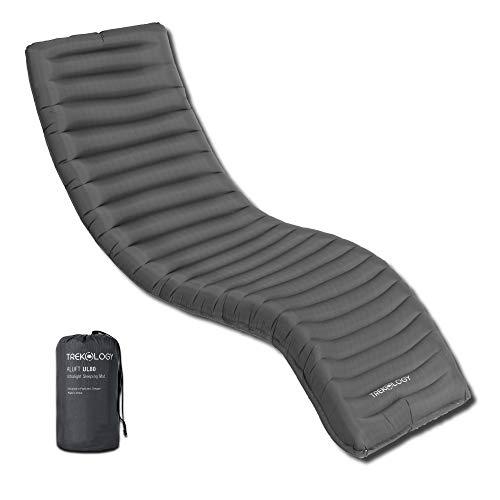
- 4-inch inflatable design with body-contouring channels
- 750 g and packs down small
- Three-season use above freezing
Best For: Comfort-focused backpackers and tent campers
Best Insulated Air Pad

- 4.6 R-value for cold-weather insulation
- 3.2-inch thickness with reflective layers
- Includes inflation bag and repair allowance
Best For: Cold-weather backpacking with a lightweight air pad
Best Foam Pad

- Only 14 ounces
- Durable closed-cell foam needs no inflation
- Folds accordion-style for transport
Best For: Minimalists prioritizing simplicity and durability
Best Built-In Pump

- Foot pump inflates the pad in about 20 seconds
- Wide 75-by-25-inch sleeping surface
- Includes repair patches and carry bag
Best For: Campers wanting quick, wide, convenient inflation
Best Insulated Comfort
ApolloAir 5.2 R-Value Sleeping Pad

- 5.2 R-value for strong insulation
- 3.2-inch profile for cushioned support
- 22 oz with pump sack and repair kits
Best For: Backpackers prioritizing warmth and comfort
Best for Everyday Use
4-Inch Inflatable Camping Sleeping Pad

- Four inches thick with integrated pillow
- Built-in foot pump inflates in about 60 seconds
- Snap buttons connect multiple pads
Best For: Car campers, families, and comfort-focused trips
Lightest Insulated Pick
Hikenture R4 Backpacking Sleeping Pad

- About 15 oz and water-bottle-size packed
- Verified 4.0 R-value for insulated warmth
- 3.15-inch cushioning with quiet 20D nylon
Best For: Ultralight backpackers needing compact insulation
Best Wide Comfort
FUN PAC Ultralight Sleeping Pad

- Extra-wide sleeping surface with built-in pillow
- Inflates in about 30–60 seconds
- Connects to another pad for a wider bed
Best For: Campers who prioritize space and cushioning
Best Technical Design
Gear Doctors Ether Ultralight Sleeping Pad

- Weighs just 17.5 ounces and packs very small
- Contoured design suits side and back sleepers
- Includes detachable pump and repair kit
Best For: Weight-conscious three-season backpackers
Best Budget Setup
Amazon Basics Ultralight Sleeping Pad

- Built-in foot pump inflates in under 60 seconds
- Packs to about 12 by 4 by 4 inches
- Water-resistant construction for general camping
Best For: Casual campers and budget-conscious hikers
Best Lightweight Air Pad – Trekology UL80
The Trekology UL80 is a practical choice among ultralight sleeping pads for three-season backpacking and tent camping. Its 4-inch inflatable design uses raised side rails and curved channels to help keep sleepers centered, while the 750-gram packed weight remains manageable for hiking trips.
Best For: Backpackers and campers who want a thick, compact air pad for above-freezing conditions.
Pros:
- 4-inch thickness and contoured sides support side, back, and stomach sleepers.
- Packs down to approximately 7.3 by 4.7 inches for easy carrying.
- Water-resistant 40D nylon construction suits spring, summer, and mild fall use.
- Large valve allows straightforward inflation and deflation without a pump.
Cons:
- Estimated R-value of 1.6–2 is not intended for winter or sub-freezing camping.
- Inflation is by mouth unless a compatible pump is purchased separately.
- At 26.5 ounces, it is heavier than some minimalist closed-cell foam options.
The UL80 balances cushioning, packability, and accessibility well. Choose it when comfort and a raised sleeping surface matter more than the lowest possible trail weight or cold-weather insulation.
Best Insulated Air Pad – Naturehike Tuye R4.6
For campers comparing ultralight sleeping pads for colder trips, the Naturehike Tuye R4.6 emphasizes insulation without a bulky packed size. Its 4.6 R-value, eight-layer aluminum-molded structure, and 3.2-inch thickness are designed to reduce heat loss while retaining a 750-gram weight.
Best For: Backpackers seeking a lightweight inflatable pad with substantial insulation for cold-weather use.
Pros:
- 4.6 R-value is designed for temperatures above -4°F/-20°C, according to the supplied specifications.
- Eight-layer heat-reflective construction helps reduce conductive and convective heat loss.
- Includes an inflation bag, straps, and repair allowance.
- Dual-vent valve supports one-way inflation and faster deflation.
Cons:
- Requires careful inflation because overinflating can cause bulging.
- At about 1.65 pounds, it is not the lightest pad in this roundup.
- Its 73.2-inch length may feel limiting for taller sleepers.
The Tuye R4.6 stands out when insulation is a priority but you still want an inflatable pad that packs compactly. Its included pump sack also avoids mouth inflation on the trail.
Best Foam Pad – Therm-a-Rest Z Lite Original
The Therm-a-Rest Z Lite Original is a dependable alternative to inflatable ultralight sleeping pads. Its closed-cell foam construction folds accordion-style, weighs just 14 ounces, and provides a simple sleeping surface that does not require inflation or risk an air leak.
Best For: Minimalist backpackers who value durability, simplicity, and low weight over plush cushioning.
Pros:
- At 14 ounces, it is the lightest listed option.
- Closed-cell foam is durable, water-resistant, and ready to use immediately.
- Accordion folding makes it easy to pack and handle.
- Dual-density foam and dimpled surfaces provide cushioning and help trap warmth.
Cons:
- Its 0.75-inch thickness offers less cushioning than the inflatable alternatives.
- R-value of 1.7 is better suited to milder conditions than deep winter use.
- Its folded dimensions of 20 by 5 by 5.5 inches can be bulky externally.
The Z Lite Original is a strong pick for hikers who want predictable performance and minimal fuss. It is especially useful when durability and instant setup matter more than a mattress-like feel.
Best Built-In Pump – WANNTS Hexagon Sleeping Pad
The WANNTS Hexagon Sleeping Pad offers convenience for campers who do not want to inflate ultralight sleeping pads by mouth. Its built-in foot pump is designed to fill the pad in about 20 seconds, and the 75-by-25-inch surface provides more width than several compact backpacking models.
Best For: Campers who want a wide inflatable pad with an integrated foot pump and included repair supplies.
Pros:
- Built-in foot pump eliminates hand, mouth, or separate-pump inflation.
- 75-by-25-inch dimensions provide a roomy sleeping surface.
- Waterproof layered ripstop nylon and TPU construction is suited to outdoor use.
- Includes a carry bag, six repair patches, and user guide; side buttons allow pads to be connected.
Cons:
- At 30 ounces, it is heavier than the Therm-a-Rest foam pad.
- The supplied notes do not provide an R-value or specific temperature rating.
- Its built-in pump adds functionality but may be less simple than a basic foam pad.
The WANNTS is a convenience-oriented choice for car camping, casual backpacking, and trips where a wider pad is welcome. Consider another model if cold-weather insulation is a central requirement, since no R-value is specified.
Best Insulated Comfort – ApolloAir 5.2 R-Value Sleeping Pad
The Gear Doctors ApolloAir is one of the more comfort-focused ultralight sleeping pads, combining a 5.2 R-value with a 3.2-inch inflatable profile. Its 22-ounce weight, compact 8.5-by-3-inch packed size, and included pump sack make it a practical choice for backpackers who want warmth without giving up cushioning.
Best For: Backpackers seeking an insulated, cushioned pad for three-season or colder camping.
Pros:
- High 5.2 R-value helps provide insulation across spring, summer, autumn, and winter conditions.
- 3.2-inch thickness and air chambers offer substantial cushioning for varied sleeping positions.
- Includes a pump sack, repair kits, and a compact carry pouch; inflation takes less than two minutes.
- Water-resistant 40D nylon with E-LAST coating is designed for durability.
Cons:
- At 22 ounces, it is heavier than the lightest pad in this roundup.
- The pump sack adds components to pack and is not self-inflating.
The ApolloAir makes sense when warmth and thicker cushioning matter more than achieving the absolute lowest pack weight. Its pump sack and repair supplies also add convenience for longer trips.
Best for Everyday Use – 4-Inch Inflatable Camping Sleeping Pad
This 4-inch camping mat stands out among ultralight sleeping pads for its built-in foot pump and integrated pillow. At 1.9 pounds, it is better suited to car camping, family trips, and shorter hikes than strict ultralight backpacking, but the thick surface provides generous support.
Best For: Campers who want fast inflation, a thick sleeping surface, and flexible use for tent or car camping.
Pros:
- Four-inch thickness provides substantial support for back and side sleepers.
- Built-in foot pump inflates the pad in about 60 seconds without mouth inflation.
- Integrated pillow supports the head and neck, while the dual-sided design aims to reduce noise.
- Snap buttons allow two pads to connect into a larger sleeping surface.
Cons:
- At 1.9 pounds, it is considerably heavier than dedicated ultralight backpacking pads.
- Its 11-by-4.7-inch packed size takes more room than the most compact options.
- The supplied details do not list an R-value.
Choose this mat for comfort and convenience rather than minimum trail weight. The built-in pump, pillow, waterproof construction, and modular design make it especially versatile for families and vehicle-supported camping.
Lightest Insulated Pick – Hikenture R4 Backpacking Sleeping Pad
The Hikenture R4 is the most weight-conscious option here, weighing about 15 ounces and packing to roughly water-bottle size. Among ultralight sleeping pads, it offers a useful balance of a verified 4.0 R-value, 3.15 inches of cushioning, and a durable 20D ripstop nylon shell.
Best For: Ultralight backpackers who want insulated three-season warmth and a very small packed size.
Pros:
- Very light at approximately 14.4 to 15.2 ounces and packs to about 7.87 by 4.5 inches.
- ASTM F3340-22 verified 4.0 R-value provides insulation for summer, spring, and fall use.
- 3.15-inch cushioning and a 73.3-inch mummy shape support side, back, and restless sleepers.
- Inflates with 10–15 breaths and uses a quick-release valve for fast deflation.
Cons:
- The mummy shape is narrower than a rectangular sleeping pad.
- No pump is included, so inflation relies on breaths through the valve.
- Its listed thickness varies between 2.5 and 3.15 inches in the supplied specifications.
For hikers counting every ounce, the Hikenture offers the strongest weight-to-insulation balance of these three products. Its compact pack size and quiet ripstop fabric are particularly useful for long-distance or space-limited trips.
Best Wide Comfort – FUN PAC Ultralight Sleeping Pad
For campers who want more room without giving up portability, this FUN PAC model is one of the more spacious ultralight sleeping pads in the group. It inflates to roughly 78 by 27 inches, includes a built-in pillow, and uses an integrated pump for quick setup.
Best For: Backpackers and campers who prioritize width, cushioning, and an integrated pillow.
Pros:
- Extra-wide design with approximately 3 inches of inflated thickness for added separation from uneven ground.
- Built-in pump inflates the pad in about 30–60 seconds and supports quick deflation.
- 40D nylon and TPU construction is described as durable, waterproof, and easy to clean.
- Side buttons allow two pads to be connected into a wider sleeping surface.
Cons:
- At 1.5 pounds, it is heavier than the lightest option in this roundup.
- The supplied specifications vary on the inflated dimensions and thickness, so verify the listing details before buying.
The FUN PAC is a comfort-focused choice rather than a minimalist one. Its width, thickness, pillow, and 400-pound capacity make it appealing for sleepers who find narrow backpacking pads restrictive.
Best Technical Design – Gear Doctors Ether Ultralight Sleeping Pad
The Gear Doctors Ether is a strong choice for shoppers comparing ultralight sleeping pads by packed size, weight, and ergonomic support. It weighs 17.5 ounces, packs to about 8.6 by 3.1 inches, and uses contoured thickness to support side and back sleepers.
Best For: Backpackers seeking a very compact pad with contoured support and a detachable pump.
Pros:
- Very light 17.5-ounce design packs to approximately the size of a water bottle.
- ErgoCushion contours provide up to 3.35 inches of edge thickness and help reduce slipping.
- Detachable foot-pump sack and anti-leak valve enable lung-free inflation and quick adjustment.
- Includes a repair kit and is backed by a stated lifetime replacement policy.
Cons:
- Its stated R-value of 2 makes it primarily suited to spring and summer use.
- The 25-inch width is narrower than the FUN PAC model.
With its low weight, compact packed size, and contoured surface, the Ether is the most technical option here for weight-conscious hikers. Its two-season insulation rating is the main limitation for colder-weather trips.
Best Budget Setup – Amazon Basics Ultralight Sleeping Pad
The Amazon Basics sleeping pad keeps the setup simple for campers who want practical ultralight sleeping pads at a straightforward price point. Its built-in foot pump inflates the 75-inch pad in under 60 seconds, while the included stuff sack keeps packed storage compact.
Best For: Budget-minded hikers, casual campers, and backyard users who want simple inflation and portable storage.
Pros:
- Built-in Insta-Pump foot pump eliminates the need for separate inflation gear.
- Weighs about 1.4 pounds and packs to approximately 12 by 4 by 4 inches.
- Water-resistant, moisture-proof construction uses durable 190T polyester fabric.
- Compatible with Amazon Basics sleeping bags for a coordinated sleep system.
Cons:
- At approximately 2.2 inches thick, it offers less cushioning than the FUN PAC.
- Its stated weight capacity is 220 pounds, lower than the other listed options.
- The 22.4-inch width is relatively narrow for sleepers who move around.
This is a sensible entry-level pad for moderate-weather camping and short backpacking trips. It trades some thickness and capacity for easy setup, a compact packed size, and accessible everyday utility.
How We Picked These Ultralight Sleeping Pads
We focused on pads designed for backpacking and lightweight camping, weighing practical factors such as packed size, construction, insulation, inflation method, sleeping surface, and overall versatility. The selection includes inflatable and closed-cell foam designs, as well as models with built-in pillows or foot pumps.
Because comfort and warmth are personal, we did not treat the lightest option as automatically the best. A pad that weighs a few ounces more may offer significantly better insulation, cushioning, durability, or ease of use for your trips.
Quick Comparison
| Type | Best For | Main Advantage | Trade-Off |
|---|---|---|---|
| Inflatable | Backpackers prioritizing comfort | Excellent cushioning for its weight | Can puncture and requires inflation |
| Insulated inflatable | Three-season and shoulder-season trips | Better protection from cold ground | Usually heavier and more expensive |
| Closed-cell foam | Rugged, simple setups | Highly durable and instant to use | Bulkier with less plush comfort |
| Built-in pump | Campers wanting convenient setup | No separate pump required | Inflation may take longer |
Key Buying Factors for Ultralight Sleeping Pads
Weight and Packed Size
Check the listed weight along with the packed dimensions. A pad that is technically light but bulky may take up valuable space inside a small pack. Consider whether the included pump, stuff sack, or repair kit is included in the stated weight.
Warmth and R-Value
R-value measures resistance to heat loss through the ground. Higher values generally provide better insulation, especially on cool or cold nights. For summer trips, a lower-rated pad may be sufficient; for shoulder seasons, look for an insulated model with a higher R-value.
Comfort and Dimensions
Compare pad length, width, thickness, and shape with your sleeping position. Side sleepers often benefit from thicker pads, while broad-shouldered campers may need a wide version to avoid slipping off during the night.
Inflation and Durability
Built-in pumps can simplify setup and reduce moisture entering the pad. Inflatable models should include a reliable valve and repair materials. Always use a groundsheet or clear sharp debris before inflating, since low weight can mean thinner fabrics.
Who Should Buy Which Ultralight Sleeping Pads?
Choose a lightweight inflatable pad if comfort and packability are your top priorities. An insulated inflatable model is the better fit for cool-weather backpacking or anyone who tends to sleep cold. A closed-cell foam pad suits hikers who value simplicity, durability, and fast setup over maximum cushioning.
Models with pillows or built-in foot pumps work well for casual campers who want an all-in-one system. For frequent long-distance hikers, focus on the best balance of weight, packed size, warmth, and field-repairability rather than choosing solely by price.