Closed-cell foam sleeping pads remain a dependable choice for campers who want reliable insulation without worrying about leaks, valves, or punctures. They are lightweight, quick to deploy, and often useful as sit pads or extra protection beneath another mattress.
Our roundup covers established designs and budget-friendly folding mats, with attention to packed size, waterproof construction, insulation, durability, and the comfort needed for different outdoor uses.
Best 10 Closed Cell Foam Sleeping Pads Picks for 2026
Best Overall

- 14-ounce accordion-fold design
- Reflective coating; R-Value 2.0
- Durable, water-resistant foam
Best For: Lightweight backpacking and dependable three-season ground insulation
Best Value
Foldable IXPE Camping Mattress

- Wide 23.6-inch sleeping surface
- Aluminum film; R-value 2.1
- Waterproof and portable
Best For: General camping, trekking, and budget-focused outdoor use
Best Classic Design

- Proven accordion-fold construction
- 14 ounces; R-Value 1.7
- Softer top and durable bottom foam
Best For: Minimalist backpackers wanting simple, economical ground insulation
Best Lightweight Wide Pad
Ultralight XPE Foam Sleeping Pad

- 10.56-ounce foldable design
- 23.6-inch width; R-value 2.1
- Raised nodes and reflective film
Best For: Hikers wanting a wide, lightweight pad that will not deflate
Reliable Trail Comfort
Lightweight XPE Foam Fold Sleeping Pad

- High-density XPE foam insulates from cold ground
- Folds quickly for packing and storage
- Water-resistant design for camping and backpacking
Best For: Campers wanting a foldable pad with dependable insulation
Warmth-Focused Pick
Featherstone El Cordion Insulated Foam Pad
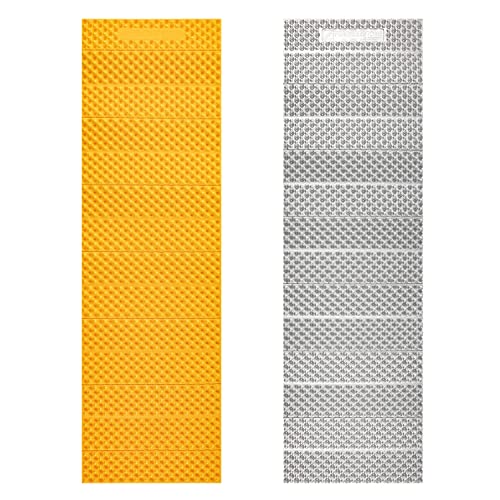
- ASTM F3340-rated R-value of 2.1
- Reflective film helps retain body heat
- Hexagonal nodes add coverage and support
Best For: Ultralight hikers prioritizing insulation and no-deflation reliability
Versatile Comfort Mat
Wakeman Waterproof Foam Sleeping Pad

- One-inch foam cushions cots and tent floors
- Non-slip, water-resistant surface
- Rolls up with a carrying strap
Best For: Car campers and households wanting a multipurpose foam mat
Best Heat-Reflective Design

- Accordion peanut-shape folding design
- Aluminum film reflects heat
- Waterproof, non-deflating IXPE foam
Best For: Ultralight campers seeking a versatile reflective mat
Best Lightweight Roll-Up
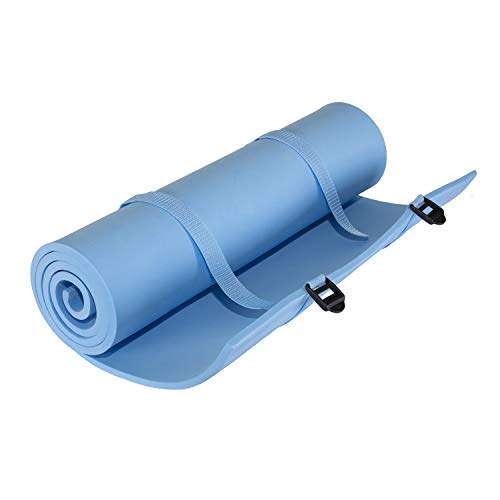
- Only 9.6 ounces
- Waterproof and puncture-proof foam
- Roll-up design with straps
Best For: Minimalist hikers prioritizing low weight and simple storage
Best Overall – Therm-a-Rest Z Lite Sol
Therm-a-Rest Z Lite Sol Camping and Backpacking Sleeping Pad, Blue/Silver, Regular - 20 x 72 Inches
Check Price On AmazonThe Therm-a-Rest Z Lite Sol is a dependable choice among closed cell foam sleeping pads for backpackers who want proven durability, simple setup, and low weight. Its accordion fold makes it easy to pack, while the reflective coating and heat-trapping dimples add warmth without inflation or pumps.
Best For: Backpackers and mountaineers seeking a lightweight, durable pad with added radiant-heat reflection.
Pros:
- Weighs 14 ounces and folds to a compact 20 x 5 x 5.5 inches.
- Reflective ThermaCapture coating increases warmth by 20 percent; R-Value 2.0.
- Softer top foam and denser bottom foam balance comfort, insulation, and ground protection.
- Water-resistant, made in the USA, and backed by a limited lifetime warranty.
Cons:
- Its 0.75-inch foam construction offers less cushioning than thicker air or self-inflating pads.
- The 20-inch width may feel narrow for some sleepers.
The Z Lite Sol is a strong all-around option when reliability and packability matter more than plush cushioning. The reflective surface gives it an advantage over basic foam pads in cooler conditions.
Best Value – Foldable IXPE Camping Mattress
This foldable IXPE mat is one of the more practical closed cell foam sleeping pads for campers who want a wide, waterproof surface and straightforward portability. Its aluminum film is designed to reflect body heat, while the accordion-style fold keeps transport simple.
Best For: Budget-conscious campers, hikers, and picnic users who want a relatively wide waterproof foam mat.
Pros:
- Provides a 72.8 x 23.6-inch sleeping surface and folds to 23.6 x 5.5 x 5.5 inches.
- IXPE foam and aluminum film provide moisture protection and heat reflection.
- Waterproof, corrosion-resistant, and described as having low thermal conductivity.
- Portable design suits trekking, camping, and everyday outdoor rest.
Cons:
- At about 455 grams, it is heavier than the listed Therm-a-Rest pads.
- The listed R-value of 2.1 provides moderate insulation rather than a cold-weather focus.
- Supplied details identify the variety as “Self Inflating Pad,” although the product description presents it as foldable foam.
This mat emphasizes width, waterproofing, and practical value. It is a reasonable pick for general outdoor use when you want more shoulder room and do not need the lightest possible setup.
Best Classic Design – Therm-a-Rest Z Lite Original
The Therm-a-Rest Z Lite Original is a classic among closed cell foam sleeping pads, using a durable accordion-fold design that has served backpackers and mountaineers for generations. It provides basic cushioning and insulation without the maintenance concerns of an inflatable mattress.
Best For: Minimalist backpackers who want a proven, economical foam pad for sleeping on the ground.
Pros:
- Weighs 14 ounces and folds to 20 x 5 x 5.5 inches for easy packing.
- Dimples help capture and trap heat; the pad has an R-Value of 1.7.
- Softer upper foam improves comfort while denser lower foam adds durability and ground protection.
- Water-resistant closed-cell foam and a limited lifetime warranty support long-term use.
Cons:
- Its R-Value of 1.7 is lower than the Z Lite Sol’s listed 2.0.
- The 0.75-inch thickness and 20-inch width provide modest cushioning and sleeping space.
The Z Lite Original remains a sensible choice for hikers who prioritize low weight, simplicity, and durability. Choose it for straightforward ground insulation, especially when the lowest listed price matters.
Best Lightweight Wide Pad – Ultralight XPE Foam Sleeping Pad
This ultralight XPE model is a practical option among closed cell foam sleeping pads for hikers who want a wider sleeping surface and compact storage. Raised nodes are intended to support the back, while reflective aluminum film adds heat-reflection capability and the foam will not deflate.
Best For: Hikers and campers seeking a lightweight, wider foam pad with waterproofing and no-deflation convenience.
Pros:
- Weighs 10.56 ounces and folds to approximately 23.6 x 5.6 x 4.9 inches.
- Provides a 23.6-inch width and 70.82-inch length.
- XPE foam and heat-reflective aluminum film provide an insulation rating of 2.1.
- Raised nodes are designed for support, and the moisture-proof pad does not deflate.
Cons:
- At 0.36 inches thick, it is thinner than the listed 0.7- and 0.75-inch alternatives.
- The shorter 70.82-inch length may not suit taller sleepers as well.
- It has a one-year manufacturer warranty rather than the limited lifetime warranties listed for the Therm-a-Rest pads.
This pad stands out for combining a wide profile with low listed weight. Its thinner construction favors portability, so it is best for users willing to trade some cushioning for compact, no-deflation convenience.
Reliable Trail Comfort – Lightweight XPE Foam Fold Sleeping Pad
For campers seeking closed cell foam sleeping pads with straightforward insulation and easy packing, this folding XPE foam mat offers dependable support without complicated setup. Its water-resistant construction and foldable design suit camping, backpacking, and trail use.
Best For: Backpackers and campers who want a lightweight, foldable pad for protection from cold, uneven ground.
Pros:
- High-density closed-cell XPE foam cushions and insulates from cold ground.
- Folds quickly for convenient storage and transport.
- Water-resistant and designed for repeated outdoor use.
- Measures 73 by 23.7 inches for broad coverage.
Cons:
- The supplied notes list the item weight as 1.43 kg, despite also describing it as under 12 ounces.
- At 0.78 inch thick, it may provide less cushioning than thicker sleeping systems.
This is a practical closed cell foam sleeping pad for users who prioritize durability, portability, and basic ground insulation. Verify the listed weight before purchasing if ultralight load planning is important.
Warmth-Focused Pick – Featherstone El Cordion Insulated Foam Pad
This Featherstone mat stands out among closed cell foam sleeping pads by combining IXPE foam with dual-density heat-reflective film. Its ASTM F3340-rated R-value of 2.1, node design, and no-deflation construction make it a practical option for ultralight backpacking and backcountry camping.
Best For: Ultralight backpackers and thru-hikers who want tested insulation, durable foam, and extra node coverage.
Pros:
- ASTM F3340-rated R-value of 2.1 helps document its insulation performance.
- Heat-reflective film is designed to trap body heat and circulate warmth.
- Hexagonal nodes provide 40% more coverage and height than traditional egg-crate foam designs.
- Closed-cell construction will not deflate, and the product includes manufacturer warranty coverage.
Cons:
- The supplied dimensions list 22.05 by 5.51 by 5.51 inches, which appears to reflect a packed format rather than the sleeping surface.
- It is listed as not water resistant.
With a documented R-value and reflective insulation layer, the El Cordion is a strong choice when warmth and dependable foam construction matter more than inflatable-pad adjustability. Confirm the packed and unfolded dimensions before ordering.
Versatile Comfort Mat – Wakeman Waterproof Foam Sleeping Pad
For shoppers comparing closed cell foam sleeping pads for camping and everyday use, this Wakeman mat offers a one-inch foam surface, non-slip texture, and water-resistant protection. It rolls with a carrying strap and can also serve as a cot pad, RV topper, floor mat, or exercise surface.
Best For: Car campers, cot users, RV owners, and shoppers seeking a multipurpose foam mat for indoor and outdoor use.
Pros:
- One-inch-thick foam provides cushioning on cots, floors, and tent surfaces.
- Non-slip texture helps keep the mat in place while resting.
- Water-resistant surface helps protect against cold, wet ground.
- Lightweight 0.6-pound design rolls to 24 by 7 by 7 inches and includes a carrying strap.
Cons:
- Its 72-inch length may be limiting for taller sleepers.
- The listed warranty is only 30 days.
- Rolled storage is less compact than a folding pad.
This Wakeman pad is a flexible choice for users who want one foam mat for camping, cots, RVs, and exercise. Its generous width and water-resistant surface are useful for general-purpose comfort, though dedicated backpackers may prefer a more specialized design.
Best Overall Width – REDCAMP 0.75-Inch Closed Cell Foam Pad
For shoppers comparing closed cell foam sleeping pads, the REDCAMP stands out with a roomy 22-inch width, 0.75-inch thickness, and a listed R-value of 2.1. Its waterproof IXPE construction and foldable design make it a practical option for camping, hiking, and backpacking.
Best For: Campers who want extra sleeping width, moderate insulation, and a foldable pad that can also serve as a seat cushion.
Pros:
- Spacious 72-by-22-inch sleeping surface with 0.75-inch thickness.
- Closed cell IXPE foam is waterproof and designed to resist damp ground.
- R-value of 2.1 provides moderate thermal insulation.
- Includes a mesh bag and weighs 380 grams.
Cons:
- Its 22-inch width may take more pack space than narrower pads.
- The R-2.1 rating is better suited to moderate conditions than very cold camping.
The REDCAMP is a balanced choice when comfort and width matter more than minimizing every inch of packed size. Its foldable format, waterproof material, and moderate insulation make it versatile for general outdoor use.
Best Heat-Reflective Design – Peanut-Shape IXPE Folding Pad
This closed cell foam sleeping pad uses an accordion-style peanut shape to fold compactly while reinforcing support. Its lightweight IXPE foam, aluminum-film surface, and waterproof construction suit backpackers seeking a durable, low-maintenance mat.
Best For: Ultralight campers who want a folding pad with a reflective surface for added warmth and versatility for sleeping, sitting, or protecting an inflatable mattress.
Pros:
- Peanut-shaped accordion design is intended to save packed space.
- Aluminum film helps reflect heat without adding substantial bulk.
- Waterproof IXPE foam is easy to clean and will not deflate.
- Can be used beneath an inflatable mattress, as a seat, or in a hammock tent.
Cons:
- The supplied notes do not specify the pad’s dimensions or R-value.
- Only one foam sleeping pad is included.
This model is a practical pick for users prioritizing dependable foam construction and a space-saving fold. The reflective coating adds a useful warmth-focused feature, though shoppers needing precise size or insulation ratings should verify those specifications before buying.
Best Lightweight Roll-Up – Stansport Pack Lite Foam Mat
The Stansport Pack Lite is a straightforward choice among closed cell foam sleeping pads, offering a full 72-inch length in a slim 3/8-inch format. Its waterproof, puncture-proof closed-cell foam rolls for transport, while included straps keep it secured in storage.
Best For: Hikers and backpackers who value very low weight, simple roll-up storage, and basic protection from cold and damp ground.
Pros:
- Weighs just 9.6 ounces for easy pack transport.
- Full-length 72-by-19-inch sleeping surface.
- Waterproof and puncture-proof closed-cell foam construction.
- Included straps hold the rolled pad for transit and storage.
Cons:
- At 3/8 inch thick, it provides less cushioning than thicker foam pads.
- The 19-inch width is narrower than the REDCAMP pad in this roundup.
The Pack Lite favors portability and simplicity over plush cushioning. Its low weight, full length, and resistance to water and punctures make it a dependable minimalist option for backpacking and outdoor sleep.
How We Picked the Best Closed Cell Foam Sleeping Pads
We focused on the features that matter most in a simple foam sleeping mat: closed-cell construction, useful insulation, water resistance, portability, durability, and ease of setup. We also considered whether a pad is better suited to backpacking, car camping, emergency use, yoga, picnic seating, or layering beneath an inflatable mattress.
Because foam pads vary widely in thickness, width, folding style, and surface design, the best option depends on how you sleep and how you travel. Product specifications should be checked before purchase, especially dimensions, weight, and stated R-value.
Quick Comparison
| Priority | Look for | Best suited to |
|---|---|---|
| Lowest pack weight | Thin, folding or roll-up foam | Ultralight backpacking |
| More warmth | Higher-density foam or a stated R-value | Cool-weather camping |
| Fast setup | Accordion-fold or compact folding design | Frequent camp transitions |
| Extra versatility | Waterproof, non-slip, durable surface | Camping, picnics, yoga, and emergency use |
| Layering | Thin foam with a flat, stable profile | Use beneath an air or self-inflating pad |
Key Buying Factors for Closed-Cell Foam Sleeping Pads
Insulation and R-Value
Foam separates your body from cold ground, but warmth depends on thickness, density, and surface structure. A stated R-value makes comparisons easier; when it is not provided, treat the pad as a three-season or supplemental layer unless the manufacturer gives clearer guidance.
Weight and Packed Size
Accordion-fold pads usually pack shorter and more neatly than roll-up models, while very thin pads are easier to carry but provide less cushioning. Check the folded dimensions against your backpack or storage space.
Comfort and Coverage
Compare length, width, thickness, and foam firmness. A narrow pad can save weight but may leave arms or legs unsupported. For side sleepers, closed-cell foam is often most comfortable when paired with a thicker inflatable pad.
Durability and Weather Resistance
Closed-cell foam will not deflate, and waterproof surfaces are useful on damp ground. Look for a textured or reinforced exterior if you expect abrasion, rough campsites, or frequent use. A groundsheet can extend the pad’s life.
Who Should Buy Which Closed Cell Foam Sleeping Pads?
Backpackers: Choose the lightest pad that still provides enough coverage and warmth, especially if it will be carried outside the pack.
Cold-weather campers: Prioritize a higher-insulation design or layer the foam beneath another sleeping pad to reduce ground heat loss.
Car campers and families: A wider, thicker, easy-folding model is usually more comfortable and convenient than an ultralight minimalist pad.
Multipurpose buyers: Select a waterproof, non-slip mat that can serve as a sleeping surface, sit pad, picnic mat, or exercise mat.
Budget shoppers: Foam pads offer dependable performance with little maintenance. The right choice is the model whose dimensions and insulation match your trips, not necessarily the one with the lowest price.