The best audio interface with loopback can combine microphones, instruments, computer audio, and streaming software without complicated routing. That makes loopback especially useful for podcasts, livestreams, online lessons, and music production.
These 10 picks range from compact one-input models to versatile four-input interfaces, with options for beginners, mobile creators, musicians, and advanced home studios.
Best 10 Audio Interface with Loopback Picks for 2026
Best Overall
Focusrite Scarlett 2i2 4th Gen

- Two mic preamps and Hi-Z inputs
- 120dB dynamic range with 192kHz support
- Auto Gain, Clip Safe, and Air modes
Best For: Home musicians and creators needing two inputs
Best Budget Loopback Pick

- Confirmed monitor mix and loopback function
- USB-C bus power with no drivers required
- Two combo inputs with 48V phantom power
Best For: Budget Windows streamers and home recordists
Best Compact Option
Focusrite Scarlett Solo 4th Gen

- One XLR mic preamp plus Hi-Z input
- 120dB dynamic range and 192kHz support
- Compact Mac, PC, and iPad-compatible design
Best For: Solo musicians and portable recording setups
Best for Streaming
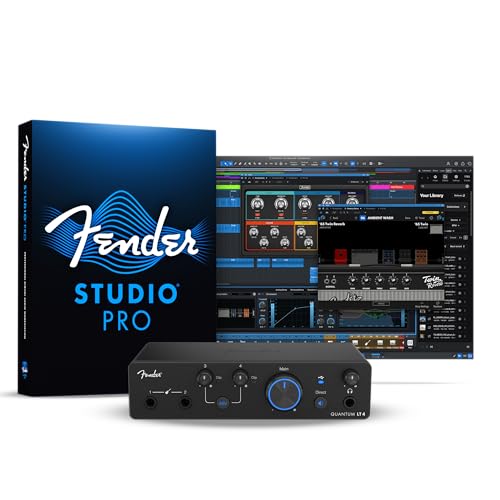
- 4x2 USB-C design with confirmed loopback
- Two mic preamps and two instrument inputs
- Balanced outputs and powerful headphone amp
Best For: Streamers, podcasters, and expanding music setups
Best Entry-Level Pick

- Air mode and high-performance mic preamp
- Hi-Z instrument input for guitar or bass
- 24-bit/192kHz recording with bundled software
Best For: Solo musicians, podcasters, and home studios
Best Traditional Loopback Pick
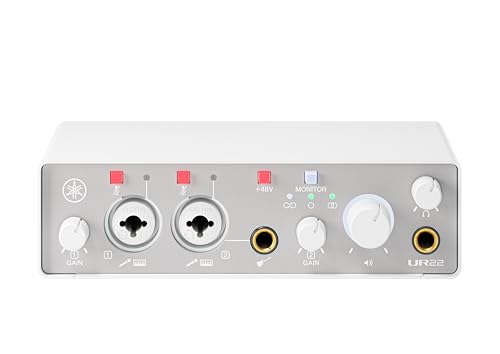
- Built-in Loopback function for streaming workflows
- Two combo inputs with phantom power
- 24-bit/192kHz support and direct monitoring
Best For: Streamers and musicians needing two inputs
Best All-Around Choice

- Four combo inputs with low-noise preamps
- Loopback and direct monitoring without extra software
- USB-C, external power, or AA battery operation
Best For: Small bands, collaborative podcasts, and multi-input streaming
Best Compact Yamaha Option

- 24-bit/192 kHz support with 2 x 2 analog I/O
- Loopback and direct monitoring included
- Compact metal casing with Windows, macOS, and iOS support
Best For: Solo recording and portable two-input streaming
Best Simple Portable Pick

- XLR/TRS Hi-Z input plus stereo 3.5mm input
- Loopback and direct monitoring without extra software
- Lightweight, USB-C bus-powered design
Best For: Solo musicians, podcasters, and mobile streamers
Best Overall – Focusrite Scarlett 2i2 4th Gen
The Focusrite Scarlett 2i2 4th Gen is a strong all-around choice for anyone seeking an audio interface with loopback for home recording, streaming, or music production. Its two inputs, 24-bit/192kHz support, Auto Gain, Clip Safe, and Air modes make it flexible for vocals, guitars, and other sources.
Best For: Home musicians and creators who need two inputs and dependable recording features.
Pros:
- Two mic preamps and Hi-Z instrument inputs support simultaneous recording.
- 120dB dynamic range and up to 192kHz sample rates support detailed recordings.
- Auto Gain and Clip Safe help simplify level setting and prevent clipping.
- Includes Pro Tools Intro+, Ableton Live Lite, Cubase LE, and Hitmaker Expansion.
Cons:
- The supplied notes do not list a dedicated loopback function.
- Its two-input design may be limiting for larger recording setups.
The 2i2 combines useful beginner-friendly controls with capable studio specifications. Choose it when recording quality and two-input flexibility matter more than confirmed loopback routing.
Best Budget Loopback Pick – PIYONE Q28 2×2 Interface
The PIYONE Q28 is a practical audio interface with loopback for creators who want a compact 2×2 setup and straightforward USB-C connectivity. It offers 24-bit/192kHz recording, combo inputs, 48V phantom power, and monitor mix/loopback functionality for recording and content creation.
Best For: Budget-conscious laptop users, streamers, and home recordists who specifically need loopback.
Pros:
- Built-in monitor mix/loopback function supports streaming and content workflows.
- USB-C is class-compliant, bus-powered, and requires no drivers according to the supplied notes.
- Two combo inputs accept microphones and instruments, with 48V phantom power available.
- 24-bit/192kHz recording and zero-latency direct monitoring are included.
Cons:
- The listed operating-system compatibility specifies Windows only.
- The supplied notes identify the model as a 2-channel interface, limiting expansion.
With confirmed loopback and a simple one-cable setup, the Q28 is well suited to basic streaming and recording rigs. Verify compatibility with your particular operating system before buying.
Best Compact Option – Focusrite Scarlett Solo 4th Gen
The Focusrite Scarlett Solo 4th Gen is a compact choice for a creator who wants an audio interface with loopback-style streaming potential but mainly records one microphone and one instrument. Its single XLR preamp, Hi-Z input, 120dB dynamic range, and 192kHz support suit solo songwriting and portable setups.
Best For: Solo musicians, vocalists, and compact Mac, PC, or iPad recording rigs.
Pros:
- One XLR mic preamp and one Hi-Z instrument input cover common solo setups.
- 120dB dynamic range and 24-bit/192kHz capability support high-quality recording.
- Improved Air mode adds presence and harmonic drive to vocals and guitars.
- Includes a useful collection of recording software and plugins.
Cons:
- The supplied notes do not confirm a dedicated loopback feature.
- Only one microphone input is available.
The Solo is easier to fit into a small workspace than a larger interface and provides the core connections most solo creators need. Select it for simplicity, but choose a model with confirmed loopback if that routing feature is essential.
Best for Streaming – Fender Quantum LT 4
The Fender Quantum LT 4 is a compelling audio interface with loopback for streamers, podcasters, and expanding music setups. Its 4×2 USB-C design includes two MAX-HD mic preamps, two instrument inputs, balanced outputs, a headphone amp, and loopback routing.
Best For: Content creators and musicians who need flexible inputs plus dedicated loopback monitoring.
Pros:
- Confirmed loopback routing supports streaming, podcasting, and content creation.
- Two 75dB-gain mic preamps and two instrument inputs accommodate multiple sources.
- Balanced TRS outputs and a powerful headphone amp provide flexible monitoring.
- Includes access to Fender amp and effects software through the Fender Studio app.
Cons:
- Its 4×2 configuration may be more than a basic solo setup requires.
- The supplied notes specify a two-year warranty, shorter than the three-year warranties listed for the Focusrite models.
The Quantum LT 4 stands out when loopback and input flexibility are priorities. It is especially well matched to creators who record instruments while managing live audio or streamed content.
Best Entry-Level Pick – Scarlett Solo 3rd Gen
The Focusrite Scarlett Solo 3rd Gen is a compact choice for musicians and podcasters who want an audio interface with loopback-style streaming workflows, although the supplied specifications do not list a dedicated loopback function. It provides one XLR microphone input, one Hi-Z instrument input, Air mode, and recording up to 24-bit/192kHz.
Best For: Solo vocalists, guitarists, podcasters, and home-recording beginners.
Pros:
- High-performance mic preamp with switchable Air mode.
- Dedicated Hi-Z input for guitar or bass.
- 24-bit/192kHz converters and low-noise balanced outputs.
- Includes recording software and Hitmaker Expansion content.
Cons:
- Only one microphone input is listed.
- The supplied notes do not confirm a dedicated loopback feature.
- USB connectivity may require an adapter depending on the device.
The Solo is a straightforward, portable interface for direct recording rather than a specialist loopback setup. Choose it for clean vocal and instrument capture, but verify loopback requirements before buying.
Best Traditional Loopback Pick – Yamaha UR22MK3 W
The Yamaha UR22MK3 W is a strong fit if you need an audio interface with loopback for streaming, online performance, or desktop-audio workflows. It combines 2-in/2-out USB connectivity, two combo inputs, direct monitoring, mute controls, and cross-platform support.
Best For: Streamers, musicians, and creators who need two inputs plus built-in loopback.
Pros:
- Built-in Loopback function for creator-focused routing.
- Two combo inputs with UR mic preamps and phantom power.
- 24-bit/192kHz support with direct monitoring.
- Works with Windows, macOS, and iOS.
Cons:
- Only two input and two output channels are provided.
- Listed warranty coverage is one year and has authorized-retailer conditions.
- The supplied notes do not specify detailed software version information.
The UR22MK3 W offers the clearest match for this roundup’s keyword because loopback is explicitly included. Its two-input layout suits compact recording and streaming setups without adding unnecessary channel count.
Best Mobile Creator Pick – MAONO P2 Hybrid
The MAONO P2 is a flexible audio interface with loopback for creators who record and stream across computers, phones, tablets, and cameras. Its dual USB ports, dual XLR inputs, Stream Mode, independent mute controls, and ProStudio 2 routing make it especially practical for hybrid mobile and desktop workflows.
Best For: Podcasters, streamers, and musicians recording with a computer and mobile device.
Pros:
- Built-in loopback routes voice, instruments, backing tracks, and desktop audio.
- Dual USB connectivity supports simultaneous computer and phone or iPad use.
- Dual XLR inputs support condenser and dynamic microphones with 24-bit/192kHz recording.
- Independent headphone, monitor, and mute controls simplify live production.
Cons:
- The supplied details do not provide a complete technical specification list.
- Its creator-focused software workflow may be more than needed for basic recording.
- Mobile compatibility depends on the connected device and setup.
The P2 is the most workflow-oriented option here, combining loopback with mobile connectivity and dedicated streaming controls. It is a sensible pick for creators who need to blend microphones, instruments, and computer audio without changing setups.
Best All-Around Choice – Zoom AMS-44
The Zoom AMS-44 is a flexible audio interface with loopback for musicians, podcasters, and streamers who need four inputs and four outputs. Its selectable Music and Streaming modes make it practical for both multitrack recording and simpler livestream setups.
Best For: Small bands, collaborative podcasts, and creators who need multiple inputs.
Pros:
- Four XLR/TRS combo inputs with low-noise preamps and 48V phantom power.
- Loopback and direct monitoring are controlled without extra software.
- Supports USB-C, external USB power, or two AA batteries for portable use.
- Works with major platforms and DAWs, including Pro Tools, Cubase, and GarageBand.
Cons:
- Larger and more feature-rich than necessary for a solo setup.
- Its four-input design may be excessive for basic voice recording.
The AMS-44 stands out when input capacity and routing flexibility matter. It is a strong fit for users who want one interface for recording, streaming, and portable setups.
Best Compact Yamaha Option – Yamaha UR12MK3
The Yamaha UR12MK3 is a compact audio interface with loopback for straightforward two-channel recording and streaming. It combines a combo microphone input, a Hi-Z input, direct monitoring, and 24-bit/192 kHz support in a lightweight metal enclosure.
Best For: Solo musicians, podcasters, and mobile creators who need a simple two-input interface.
Pros:
- 24-bit/192 kHz support with 2 x 2 analog I/O.
- Includes a UR mic preamp, phantom power, and a Hi-Z input.
- Provides direct monitoring, loopback, and mute buttons.
- Works with Windows, macOS, and iOS.
Cons:
- Only two channels limit larger recording setups.
- Its full feature set may be more than needed for basic single-source recording.
The UR12MK3 is a practical choice when you want Yamaha’s compact metal design and high-resolution support without moving to a larger interface. Its loopback and cross-platform compatibility also suit uncomplicated streaming workflows.
Best Simple Portable Pick – Zoom AMS-22
The Zoom AMS-22 is a lightweight audio interface with loopback designed for solo recording and streaming. It offers one XLR/TRS combo input, a stereo 3.5mm input, and dedicated Music and Streaming modes for an uncomplicated workflow.
Best For: Solo musicians, podcasters, and content creators who prioritize portability.
Pros:
- Combines an XLR/TRS Hi-Z input with a stereo 3.5mm input.
- Loopback and direct monitoring work without additional software.
- USB-C bus powered for simple computer-based recording.
- Compatible with Mac, PC, iOS, and Android devices.
Cons:
- Its single main combo input is not suited to larger recording sessions.
- Maximum sample rate is 48 kHz.
- USB bus power depends on the connected computer or device.
The AMS-22 is a good match for creators who want essential loopback functionality in a small, 230-gram package. It keeps solo streaming and mobile recording simple while retaining a dedicated instrument-capable input.
How We Picked the Best Audio Interface with Loopback
We focused on interfaces that support loopback or flexible computer-audio routing, while also considering input count, connection type, monitoring, portability, and intended use. The selection includes USB-C models, compact interfaces for solo creators, and larger options for interviews, bands, and multi-source streams.
We also weighed practical details such as combo inputs, instrument compatibility, direct monitoring, driver support, mobile-device connectivity, and whether the design suits recording, streaming, podcasting, or a combination of those tasks.
Quick Comparison
For a straightforward two-channel setup, the Focusrite Scarlett Solo models and Yamaha two-in/two-out interfaces are sensible starting points. The Scarlett 2i2 adds two versatile inputs and is better suited to recording two microphones or instruments at once.
Creators who need more simultaneous sources should consider the Fender Quantum LT 4 or Zoom AMS-44. The MAONO P2 is oriented toward hybrid computer-and-phone workflows, while the Zoom AMS-22 prioritizes a compact, portable setup. The unbranded 2X2 model may appeal to budget shoppers, but verify its software compatibility, driver support, and loopback implementation before buying.
Key Buying Factors for an Audio Interface with Loopback
Input and Output Count
Count the sources you need to connect at the same time. One mic and headphones require far less hardware than two guests, a guitar, and stereo computer audio. Additional outputs are useful for separate monitor, headphone, or external-device feeds.
Loopback Routing
Loopback sends computer audio back into the recording or streaming application. Check how the interface handles this routing: some offer dedicated loopback channels, while others depend on mixer software or driver settings. Confirm compatibility with your operating system and preferred streaming app.
Connection and Mobile Support
USB-C can simplify modern computer connections, but cable type and power requirements still matter. If you record with an iPad, phone, or other mobile device, verify the required adapters and whether the interface receives enough power for microphones and headphones.
Monitoring and Preamps
Direct monitoring helps reduce latency when recording. Look for independent headphone control, reliable monitor outputs, and sufficient gain for your microphone. Instrument inputs should provide a suitable high-impedance connection for guitar and bass.
Who Should Buy Which Audio Interface with Loopback?
Solo Streamers and Podcasters
Choose a compact one-input or two-input interface if you mainly use one microphone, headphones, and computer audio. The Focusrite Solo, Yamaha compact models, and Zoom AMS-22 are worth considering for simple desks and portable kits.
Musicians Recording Two Sources
The Scarlett 2i2 and similar 2×2 interfaces are better choices for vocals and guitar, stereo instruments, or two microphones. They offer a useful balance of size, controls, and expandability.
Interviews, Panels, and Multi-Source Streams
Pick a four-input model when you need multiple microphones or instruments connected simultaneously. The Fender Quantum LT 4 and Zoom AMS-44 provide more room for complex sessions, though they require more desk space and planning.
Mobile and Hybrid Creators
If your workflow moves between a computer, phone, and tablet, prioritize documented mobile compatibility and flexible power options. A mobile-friendly interface can prevent the adapters and power limitations that often complicate on-the-go recording.